Philosophy
Everything flows
- Heraclitus
The river flows on ceaselessly,
yet the water is never the same. (方丈記
/ Hojoki)
If you were asked,
“What is Japanese culture?”, how would you
answer?
In Japanese art and philosophical expression – including physical expression, we have traditionally cherished the concept of “the flow of time.”
.
.
.
I believe this is one of the most defining characteristics of Japanese cultural expression.
In this country, we have expressed this through concepts, such as “Ichi-go Ichi-e”(once in a lifetime encounter), “Ma”(the beauty of spaces and the pauses) and
“Nagare”(the continuous flow).
The short film introduction below, literally embodies this profound charm of Japanese culture:
As seen in traditional poetry like Tanka and Haiku, artistic expression in this country has long valued a certain virtue: how to refine something that
is inherently transparent, flavorless, and odorless—just like water.
Furthermore, we Japanese often prefer to express the seemingly mundane aspects of daily life simply by shifting our perspective and focus.
When viewed through this lens, you will find that this commercial is beautifully interwoven with such delicate subtleties.
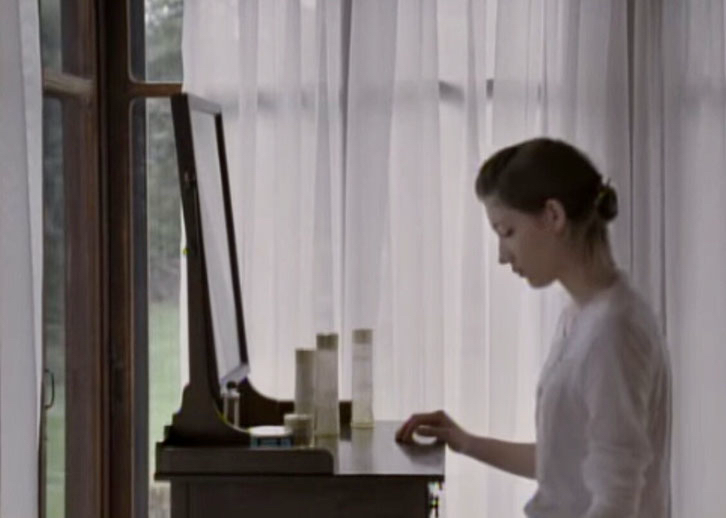
First, this film tells a story of heartbreak.
Rather than finding beauty in things that are complete or perfect, the Japanese sensibility finds a profound beauty in things that are chipped, flawed, or lost.
It is from this cultural mindset,Ibelieve,thatthis kind of artistic expression is born.
Rather than finding beauty in things that are complete or perfect, the Japanese sensibility finds a profound beauty in things that are chipped, flawed, or lost.
It is from this cultural mindset,Ibelieve,thatthis kind of artistic expression is born.
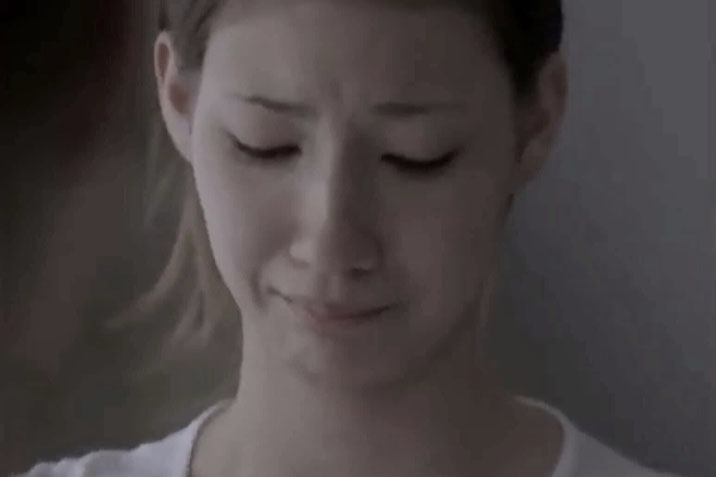
Instead, the beginning and the end of the story are presented briefly, leaving the transition hidden within an unspoken blank space—a deliberate “Ma”.
It is understated, yet incredibly elegant.
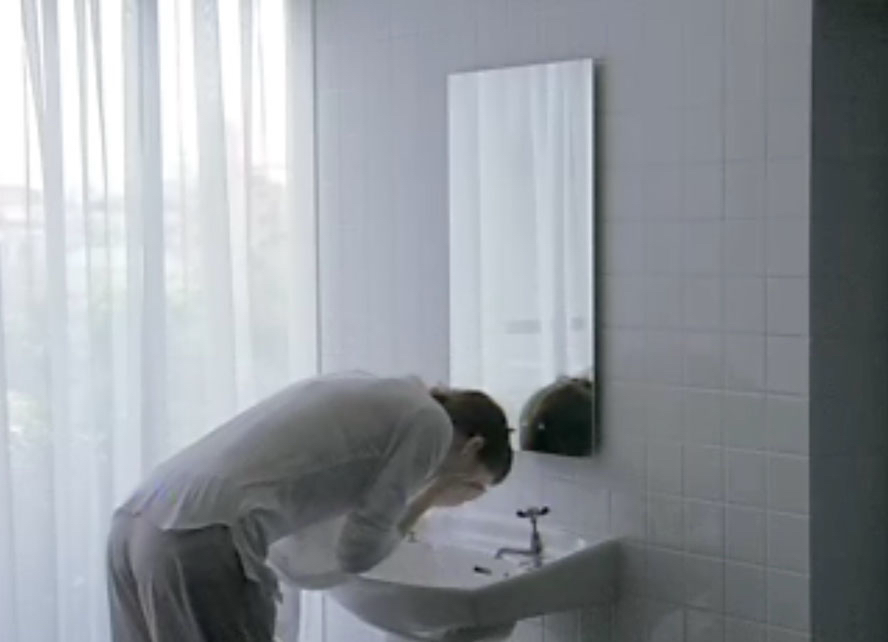
What the piece truly attempts to convey is her silent, wordless grief after the heartbreak—capturing that subtle, lingering emotion known as “Yoin.” (余韻)
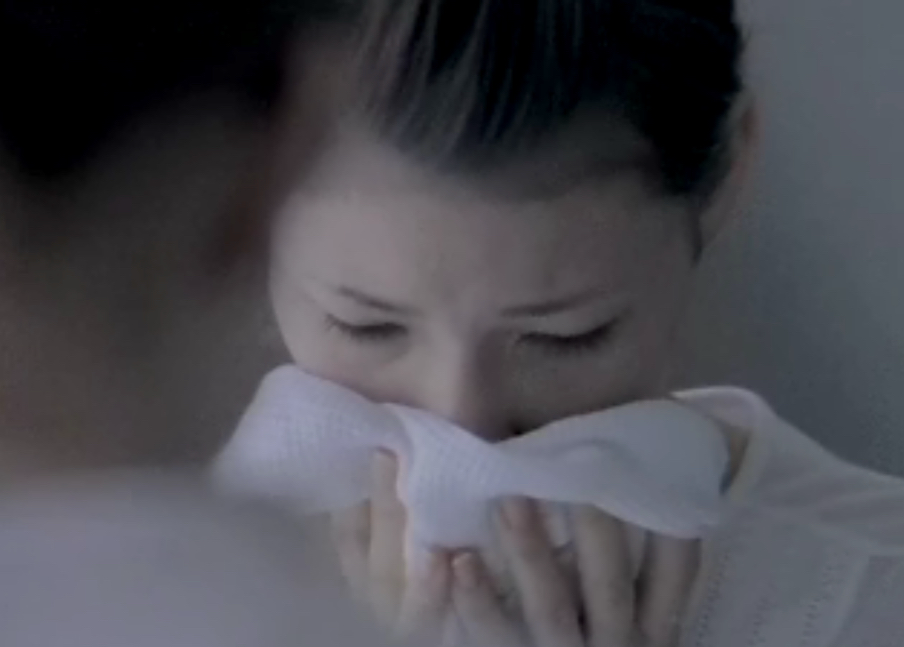
Yet the water is never the same
As you watch, you can see the woman’s facial expressions gradually shift and transform with the passage of time.
This very transformation of her expression is the true subject of the piece.
Things do not simply stop and sever; they exist in the present as part of a continuous flow from the past, moving steadily into the future.
It teaches us that nothing remains unchanged.
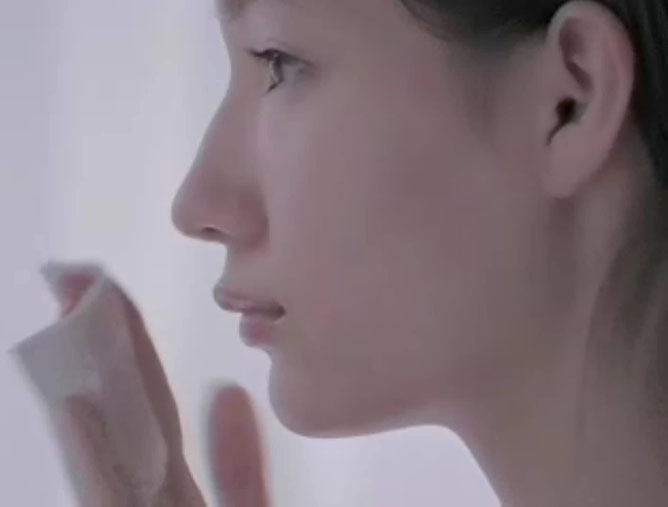
The river flows on ceaselessly,
yet the water is never the same
While this truth mirrors the human heart itself, this work beautifully portrays the “mind” as something that shifts and flows seamlessly, just like
water.
It also draws our awareness to how we might capture and convey the fleeting “beauty” of a single ephemeral moment.
Her expression transforms gracefully, almost like the changing of the four seasons.

Rather than being struck by pure, unblemished beauty, our hearts are moved by deeper beauty – one interwoven with hidden pain and vulnerability.
The beautiful smile she reveals at the very end is one born only after passing through that heartache.
What is truly beautiful is ephemeral, leaving behind a profound, lingering resonance (“Yoin”).
While the wind scatters things away, water carries them from the past into the present, and connects them further into the future.
It brings the realization that Japan is not a world governed by the volatile wind, but rather a world shaped by the element of water.
Perhaps it is precisely because something is bound to be lost that a single, fleeting moment can become eternal.
Don’t you feel that these delicate moments of this woman’s daily life, captured so beautifully here, hold the power to captivate the true essence of our Japanese sensibility?